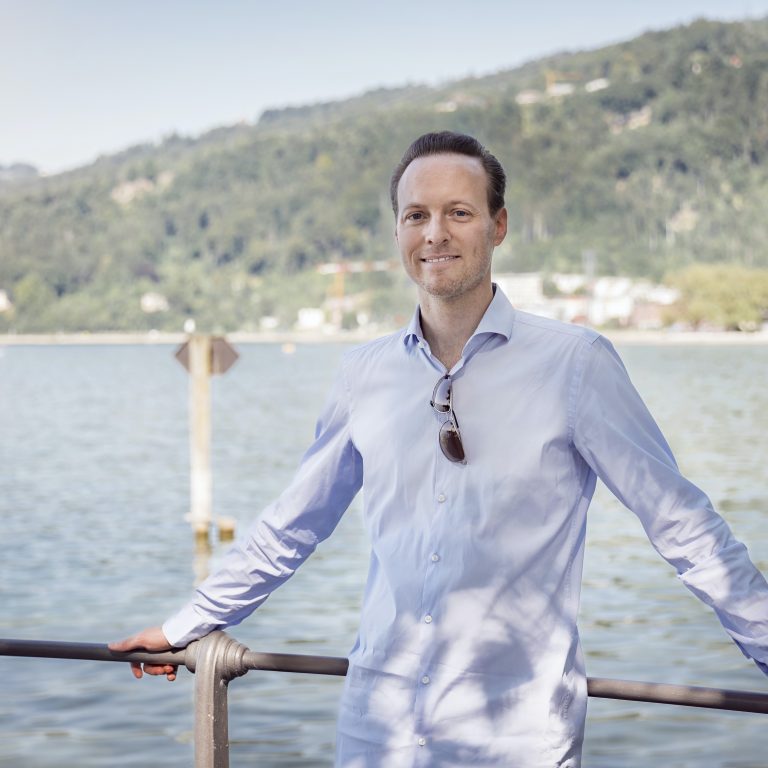
C Matthias Honeck © Michael Kreyer
A heaven full of violins
An interview with Matthias Honeck
C Matthias Honeck © Michael Kreyer
An interview with Matthias Honeck
Matthias Honeck
An interview with Matthias Honeck
TEXT: MIRJAM STEINBOCK
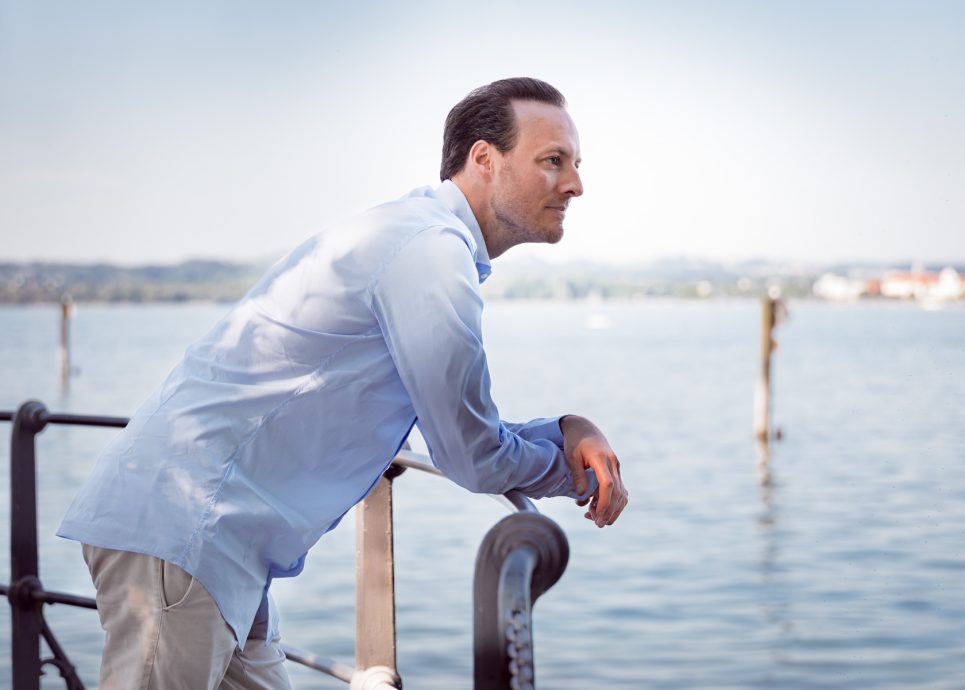
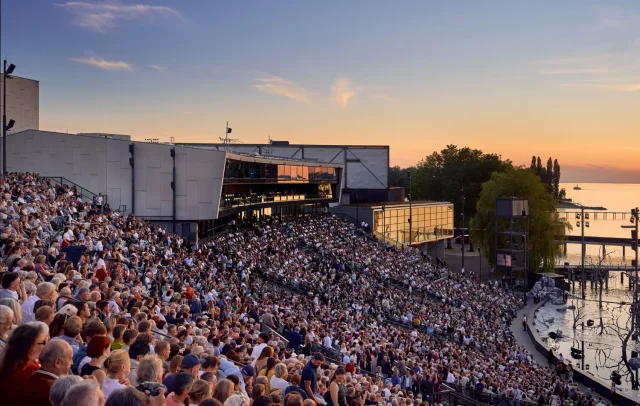
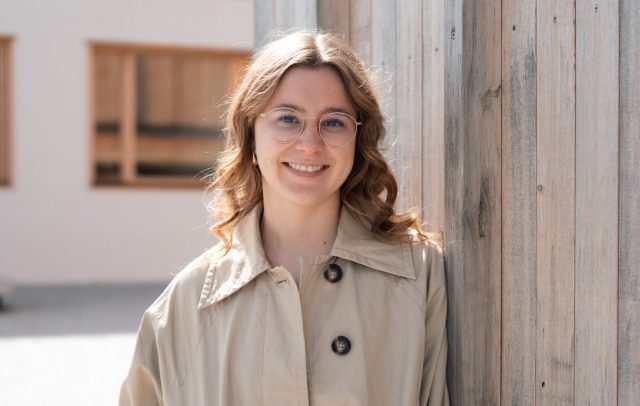
Matthias Honeck spent this summer in Vorarlberg. As a member of the Vienna Symphony Orchestra and the person responsible for the second violins, he and the ‘Amati’ he played gave voice to ‘Madame Butterfly’, the opera performed at this year’s Bregenz Festival. He’s a professional musician, dad to four children, lives mainly in Vienna and puts his homesickness behind him during the summer festival when he lives with his family at his parents’ house and loves to retreat to the Nenzinger Himmel – the Heaven of Nenzing, which is a collection of seasonal high-alpine settlements in the Gamperdonatal valley.
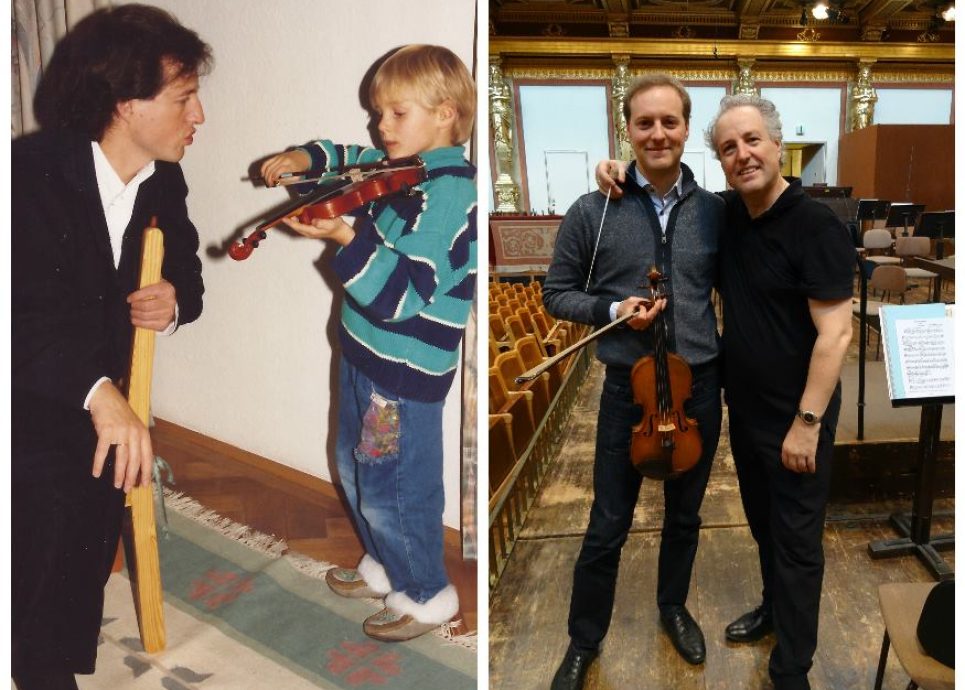
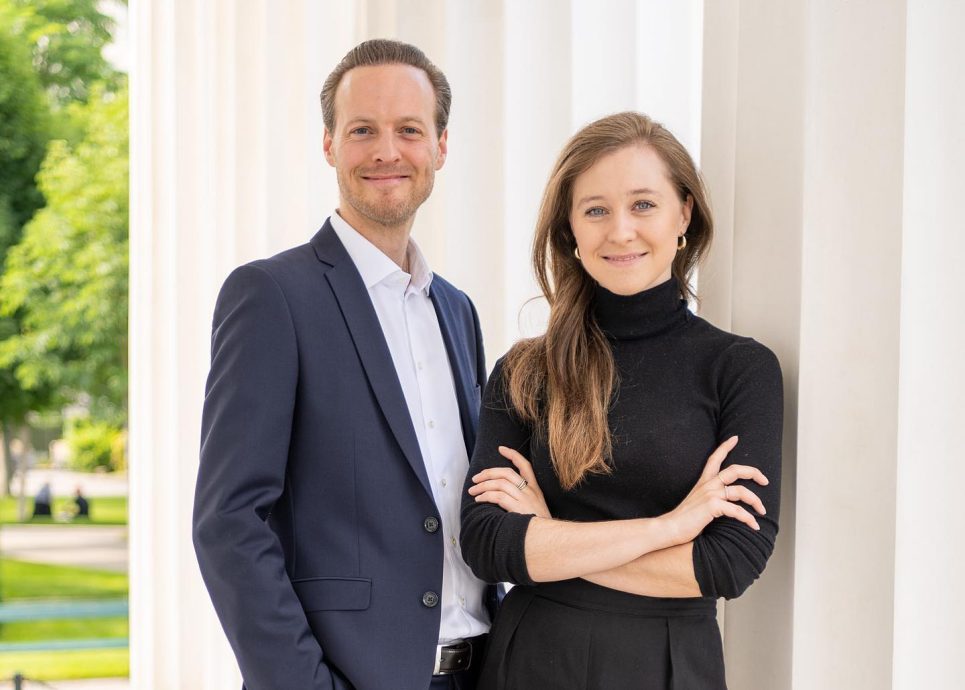
He comes from a family of artists and – along with his sister Anna Maria – continues the success story of his father, conductor Manfred Honeck, and his uncle and teacher, concertmaster Rainer Honeck, in the Bregenzerwald’s :alpenarte music festival. The two will be presenting their programme for young people on and in front of the stage for the first time as the new management team in October and will be complementing it with a creative educational concept. In an interview with Vorarlberg Tourismus, Matthias Honeck chats, among other things, about his likes and visions, the extent to which it’s possible to involve young people in music and that the relationship with his approximately 400-year-old violin is definitely a passionate one. The interview was conducted by Mirjam Steinbock.
Mr Honeck, you studied in Feldkirch, Zurich and Vienna and graduated with a master’s degree in 2011. You became an ensemble member of the Vienna Symphony Orchestra in the same year, and you were appointed principal second violin in 2019. That sounds a little bit like hard work, is it?
Yes, it is. The role comes with responsibility for a group and you have to make sure that you play smoothly together. We principals communicate with the other principal string players. We have to understand each other very well, coordinate and also discuss certain things afterwards. That requires preparation. So you look at the scores in advance and listen to the pieces. Ideally, the principal knows the piece better than the others in the group. It also happens that we have to take on additional responsibility because, for example, conductors in operas need to concentrate more on the singing.
How do you come by a role like that?
Through an internationally announced audition in which we as members of the orchestra were also able to take part. That’s what I did with a few others from our group and I got lucky.
With a lot of skill besides luck I assume.
Yes (laughs), I did put in a lot of effort to get the role, it took months of preparation. But my colleagues also made it very easy for me. It’s not necessarily easier when you’re applying from within your own orchestra just because it’s assumed the group is behind you. The group must be able to trust you and accept what you’re doing at the front. I also think that the fact that I got the job is confirmation that the group has confidence in me. And that’s something I’m particularly pleased about, of course.
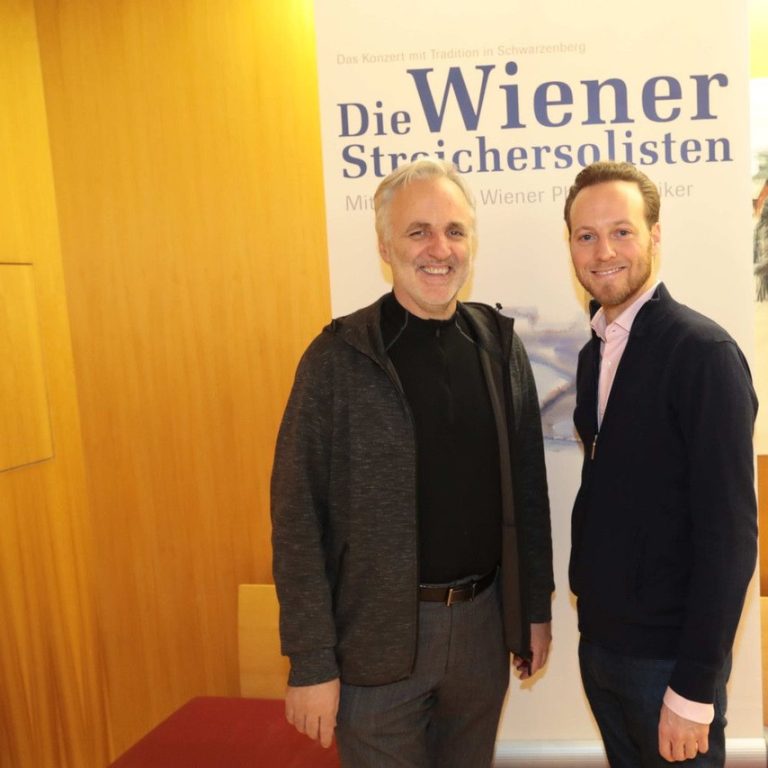
You’re filling several leading roles in the field of music. You’re also artistic director of the Vienna String Soloists besides working with the Honeck Quartet, which performs annually in Hohenems.
That’s an 11-piece string ensemble that’s all about the Wiener Klangstil – the Viennese sound style. Here, colleagues from the Philharmonic play with the Vienna Symphony Orchestra, which is pretty special for an ensemble. This meeting of the two orchestras is a very fruitful exchange because we’re on the same wavelength in terms of the sound; we all just click straight away. Relatively young colleagues are also involved, it stands out for its great mix.
Are the willingness to experiment and freshness something that’s just characteristic of the young music generation?
Not necessarily. Someone who’s highly experienced is often able to respond much faster because they’re able to catch on to certain things more quickly. Young colleagues may be more likely to make a spontaneous decision that could be a little off the mark. Experience frequently makes a big difference but, at the same time, playing is a physical thing and when you’re close to retirement you feel it more and you may not be able to move as well … but you can still add a touch of freshness to everything you play. I like it when it’s obvious that someone is enjoying playing and having fun with it. And that ultimately transfers to the audience as well.
The orchestra at the Bregenz Festival is in the Festspielhaus while the performers are out on the lake stage. How does that affect you as a musician?
It’s obvious that operas there are not like the ones staged in opera houses. But that has a variety of aspects, not only because we’re transmitted to the outside, but also because the lake stage is an open-air stage. We also don’t feel the singers as we do when we’re in the pit. That’s the beauty of opera in its traditional form. We’re able to respond to the dynamic. If, for example, the singing becomes a touch softer, we’re able to react to it immediately. When playing at the Lake Festival, the vocals are transmitted to us into the hall through monitors, which, of course, means you aren’t able to catch as many nuances. But, at some point, you know approximately where you are, and outside the sound is also mixed, because you want everything to come together to form an overall work of art. That’s a compromise in a way, one that I think is realised in the best possible manner.
A little aside about the instrument: you play on a violin built by the Amati brothers at the beginning of the 17th century. That’s probably a huge legacy and it sounds like an intense partnership too.
To exaggerate, it’s like a marriage (laughs). Sometimes I’m not having a good day and sometimes the violin isn’t having a good day. The air in Bregenz changes with the humidity, I feel that a lot with this old instrument. The small cracks in the Amati have all been glued, but, when something moves, it can sometimes be a bit contrary or ‘z’wider sein’ as they say in Vienna. And that’s where you have to know how to placate it. And, at other times, it gives me everything – and then I think, wow, it’s great today, just brilliant! It’s actually a bit like something that’s alive. The wood works, but, I am, of course, able to set specific parameters with different strings, by elevating the bridge or how I use the bow, but we’re actually responding to each other. I’m really happy that this great violin has been entrusted to me by Merito String Instruments Trust GmbH!
Back to the concert hall, where the musical experience is unique and it’s possible to create great resonance and sound spaces.
That brings me back to the Viennese style of playing and which I champion because it’s a great passion of mine. A variety of nuances exists that set it apart from, say, a German or American orchestra, and I believe that that’s something that can be felt in the concert hall. Transporting a message, emotions, something that also means something from the inside and that has nothing to do with technical parameters or perfectionism is incidentally one aspect of the essence of :alpenarte. We musicians always want to give the listeners something. For me, just being able to touch one person is enough. The concert has already been worth it if that person leaves the hall saying, “That’s given me a lot.” That’s what it’s all about and this aspect was very essential, for example, in the decision for :alpenarte.
We musicians always want to give the listeners something. For me, just being able to touch one person is enough.
How did you come to direct this festival?
I know the festival initiators Jakob Greber and Hans Metzler from the Schwarzenberg Advent Concert where we play with the string soloists. They thought the :alpenarte could be something for me and simply asked me. I then took a few months to think about it because, on the one hand, I hadn’t worked as a director before and I initially needed to give the responsibility associated with the role due consideration. But I also wanted to see if I could think of anything beautiful and visionary for the concept and I came up with quite a long list as it turned out. One sticking point was that I come from a purely operational, artistic background and needed someone who’d be able to assist me with the management side. Fortunately, my sister Anna Maria said she could handle that aspect of the project. She holds a very similar role at the Konzerthaus Wien where she’s advisor to the artistic director as the one she has with :alpenarte and she provides her active support with contracts and such.
Is this your first collaboration?
It is in fact the first time that we’ve worked together at this professional level and we’re excited to see how it’s going to turn out.
Do you think it helps to come from a family of musicians and consequently have a sense for creating professionally?
Yes, definitely. We’re able to draw on a large network, which is an advantage that benefits the festival. We’re familiar with the processes, agencies and managers and have corresponding contacts to artists.
Your vision of what the festival is to be or become is described very pictorially on the website and focuses on the involvement and introduction of international as well as regional actors.
The :alpenarte’s objective is to present young musicians. Young is relative, we’re focusing on performers who have not yet reached the 30-year mark and to whom highest quality is important. But some instruments and disciplines only allow you to achieve a certain level at a later stage in life – so there’s no clear age limit.
Your programme is addressing audiences both with musical experience and without. Is it enough to listen to high-quality concerts without prior experience or is some kind of educational provision always necessary?
I’m more inclined to think that you can always take something away. And yet, more knowledge should be made available to audiences if they want it. Music always has a message, whether it’s modern or old, baroque or romantic. It can, of course, help if you’re aware of the context but I’m not convinced that it’s always a benefit.
What do you mean by that?
Well, when I hear a symphony for the hundredth time, I have certain expectations. I know there’s this horn solo coming up and I want to hear it in a certain way. If the musician then plays it differently, then I already have a prejudiced expectation that removes the element of surprise. A nice example is the Advent Concert in Schwarzenberg. A lot of people go there who’d otherwise never go to a concert. We always play very approachable programmes there, but always add a few individual pieces that are not as accessible. People often come up to us afterwards to tell us that they enjoyed the overall package. They’re usually not even able to say why but, for me, it means to have been enriching in the music. But I also think it’s important to provide the details if someone wants them – and that’s what we’re aiming to do with :alpenarte.
So there’ll also be an education in music there?
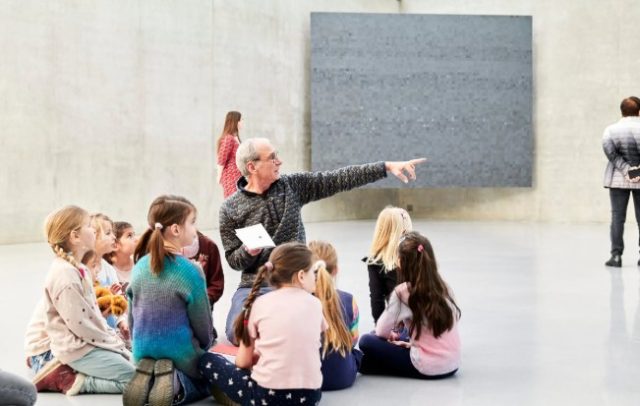
That’s what we’re mainly doing for children and young people between the ages of six and 18. It’s not new but we want to make it bigger and do it professionally with music educators to help young people get started. I gave a lot of thought to how important art and music is for young audiences before and during the pandemic. It can’t be denied that the classical world already had a problem with that aspect. Trips to famous concert halls, for example, are also expensive, of course. So we want to create a lasting and accessible basis with :alpenarte. To this end, we invite regional as well as internationally active young musicians, some of whom are already stars at the age of 20. We aim to have something of everything in the programme. This year, for example, we’re staging a concert with A Capella Ensemble and brass musicians, which I am particularly looking forward to because I’ve never experienced that in this way before either. The overall experience is important to us – as is the fact that you don’t just go to the festival for a piece of music but also for encounters with people and conversations with the artists. Or because of a good meal and because you feel good at the :alpenarte.
How would you make classical music more attractive to young people?
Basically, I think it’s important for them to feel something and be interactively engaged. So actually blowing into a trumpet so they can experience how they make their sound. In fact, many people have never had the opportunity to do so because it may not have been important to the family or was too expensive. We want to make things affordably interactive during the festival week. Young people up to 14 years of age will be able to attend the festival for free, and there are concessions for 14- to 25-year-olds, so it’s a really easy and financially independent decision to come to the festival. We want young people to attend the festival – on stage and in front of it – that’s what we’re personally aiming for. It would be so nice to see different generations coming together and sharing their experiences. Next year, for example, we’re planning workshops with ensembles.
To get up close and establish relationships?
Yes, personal encounters are a must. We’ve unfortunately only got the one week of the festival for that but perhaps we’ll be able to extend that time frame later on. I believe that it could set an example for the region and maybe even for the politicians and the artists here. We’re very hopeful.
The theme of sustainability extends beyond art to food that’s fair.
We want to present regional artists in the foyer ahead of the concerts. There’ll be a small stage and visitors will be able to enjoy the music and talk to the artists with a drink and some food. There’ll be a long break before the main concert starts and Wolfgang Mätzler from ‘Fairkocht’ will be presenting his great products. We also want to have a presenter to introduce the artists so the audience will know who they are and what their personal approach to music is. That could then be explored further in discussions.
What does :alpenarte want to be for the participating artists on their CVs, what do you want to be said about you?
We basically want to be remembered first and foremost as a warm-hearted festival. A place where you feel at home. That doesn’t offer much in regard to the CVs as such, but it’s initially the most important thing for us. I know from my own experience that, if I am appreciated somewhere and the people are really open, I like to go back – and that entirely independently of what I’m being paid. It means much more to me than a beautiful hall or stage. And we want to be a stepping stone to the world stage, even if some of those we’ve invited are already performing there. One day, :alpenarte will perhaps be a significant stage in a musician’s CV, I very much hope so.
And one more personal question: are musicians able to separate their private lives from their professional ones?
It helps that my wife is not also a musician. I really enjoy that because it lets me switch off a bit at home. But, at the same time, my instrument is always there, of course. I need to practice, prepare for months and make sacrifices. It’s comparable to top-class sports. You need to invest a huge number of hours to improve by a 10th of a second or you won’t make it otherwise. You’re always training, for hours, in a very physical way. Even when I’m away on holiday, I can still feel the violin. But, at the same time, it’s still the most beautiful thing in the world …
Thank you very much for the interview!
The :alpenarte festival will open its doors to the public from 10 to 12 October 2025 in Schwarzenberg in the Bregenzerwald.
A detailed biography of Matthias Honeck can be found on The Wiener Symphoniker Orchestra website.
Read more