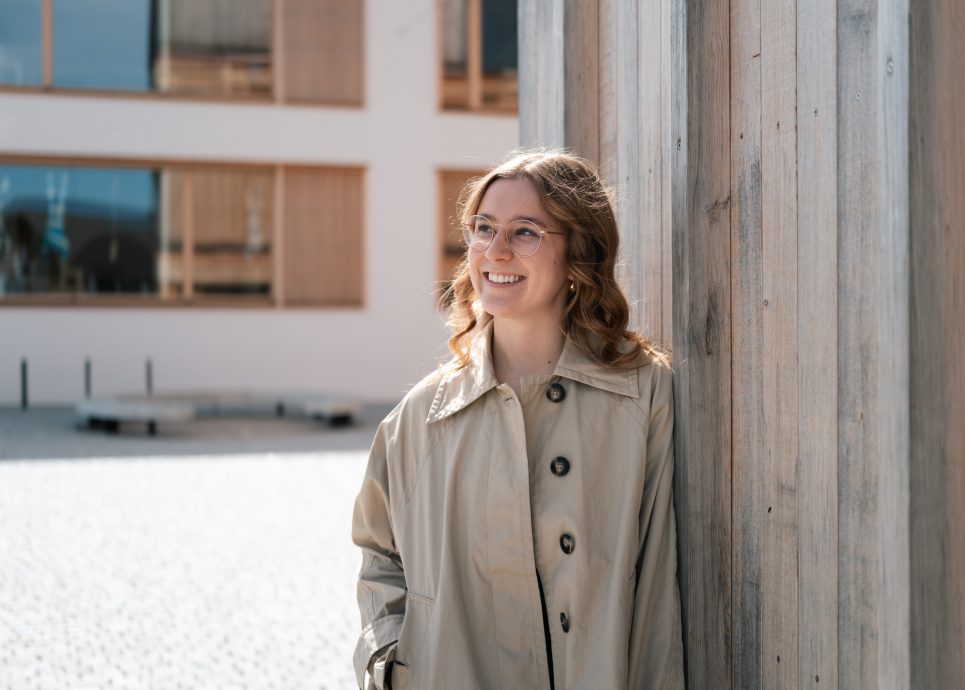
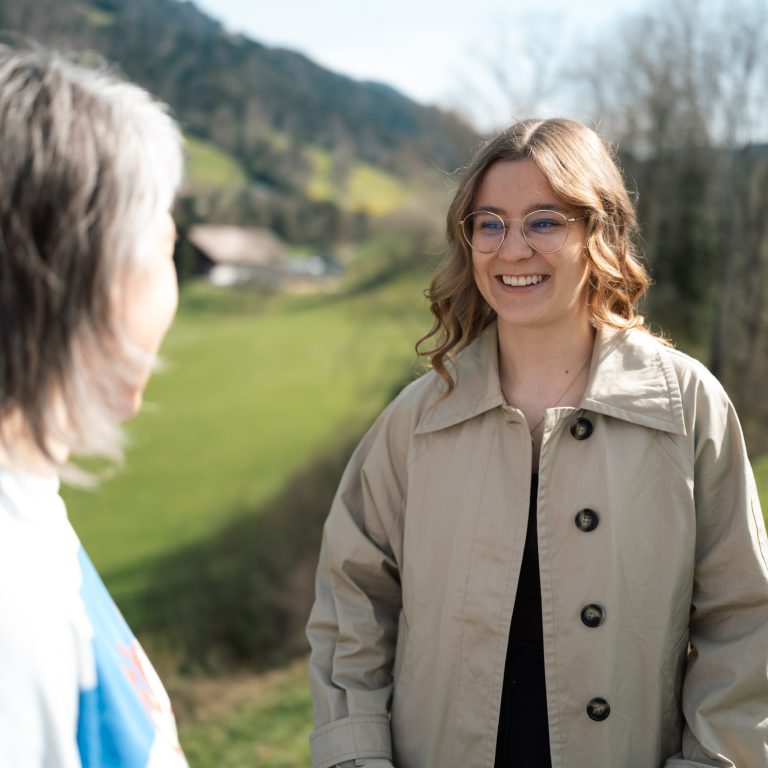
C Johanna Bilgeri © Nina Bröll
The language we all understand
In dialogue with bassoonist Johanna Bilgeri
C Johanna Bilgeri © Nina Bröll
In dialogue with bassoonist Johanna Bilgeri
TEXT: MIRJAM STEINBOCK
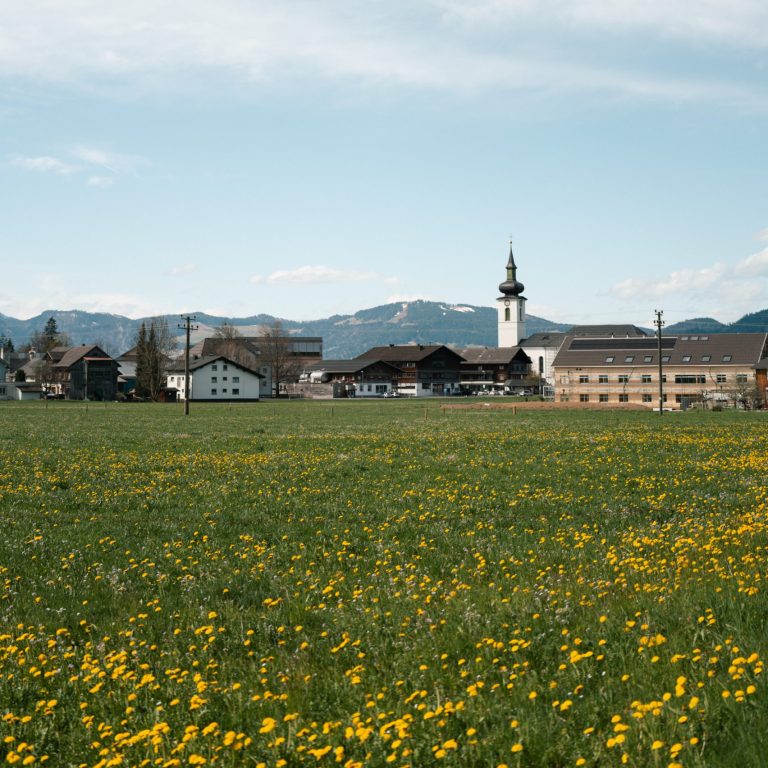
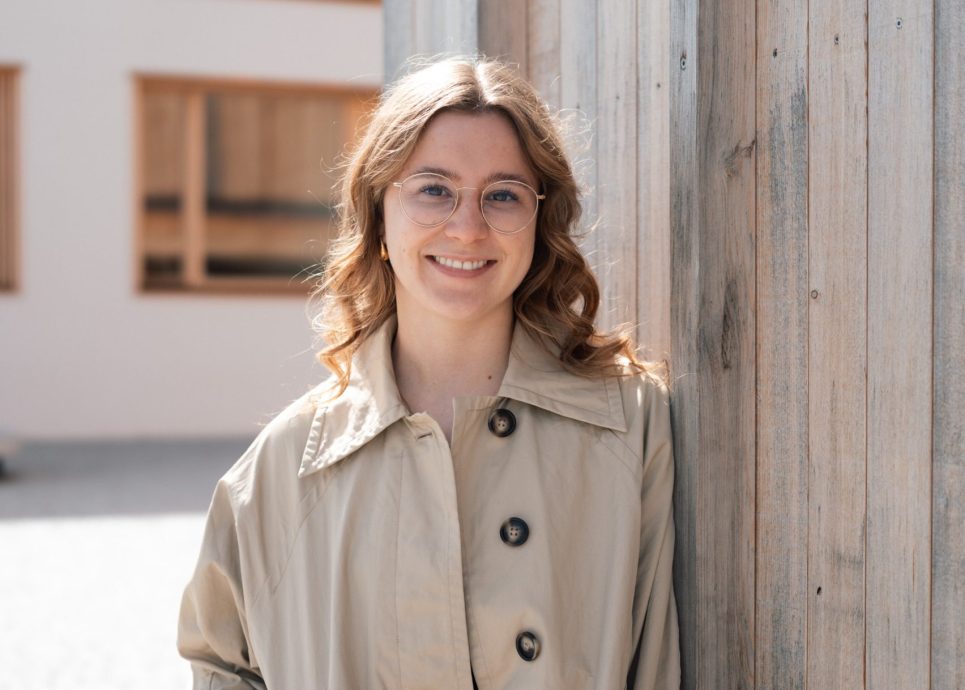
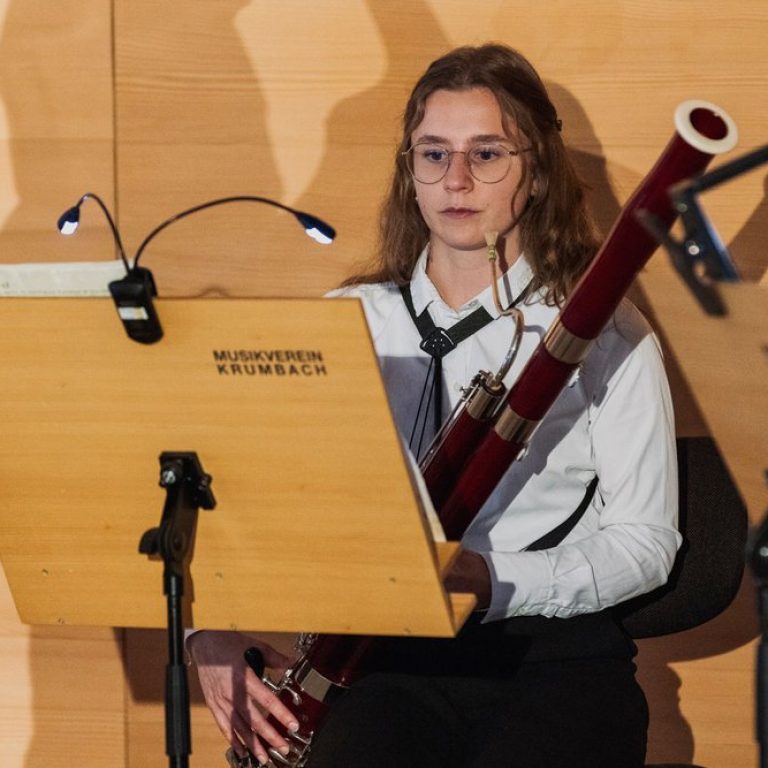
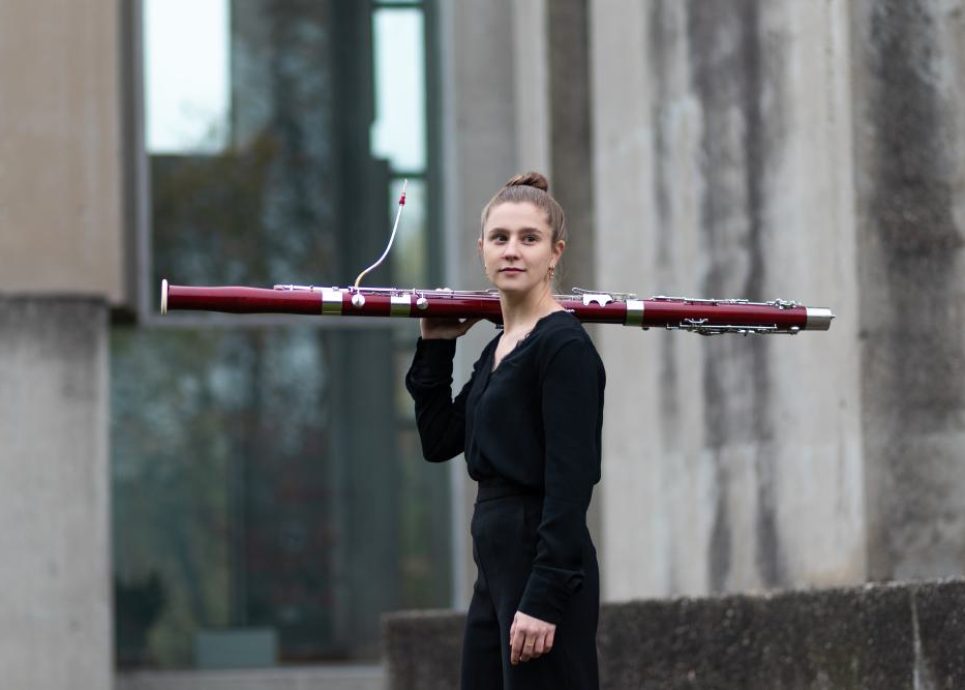
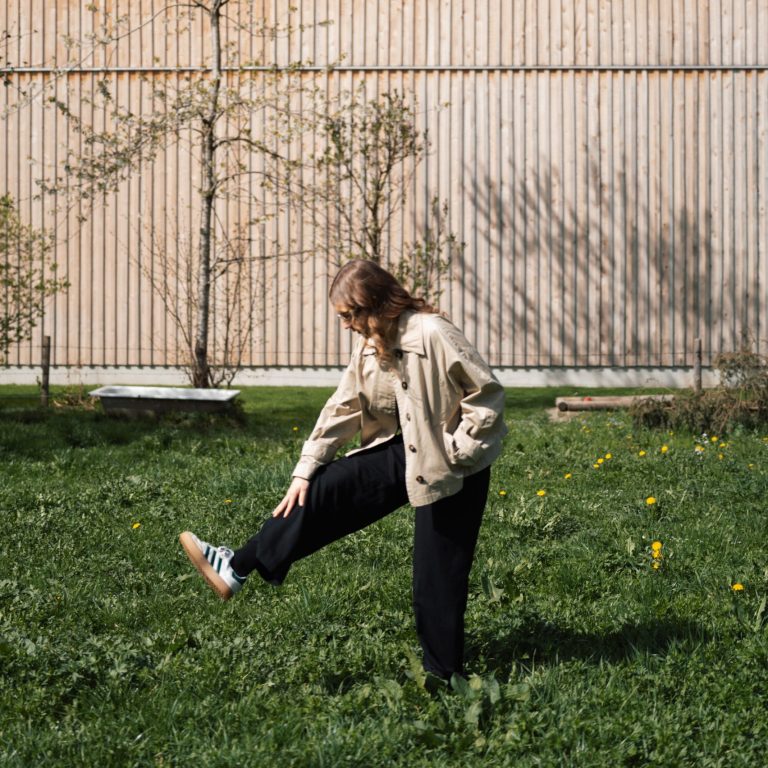
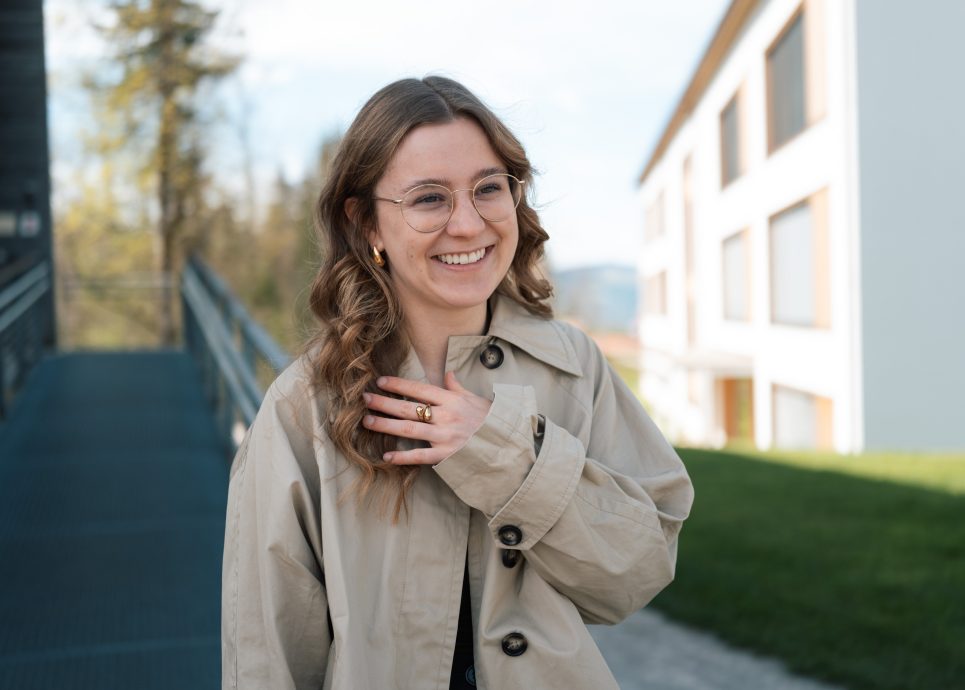
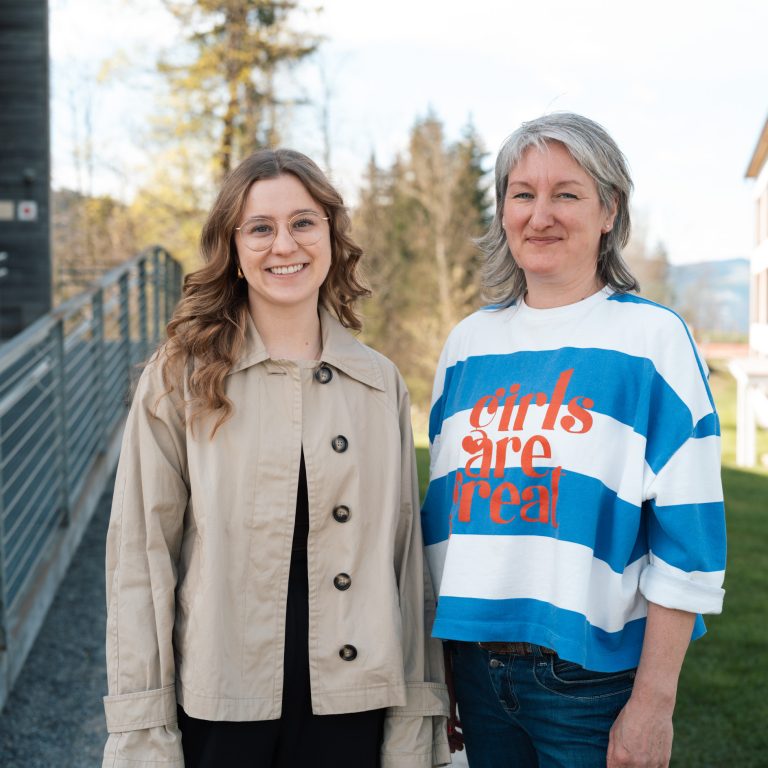
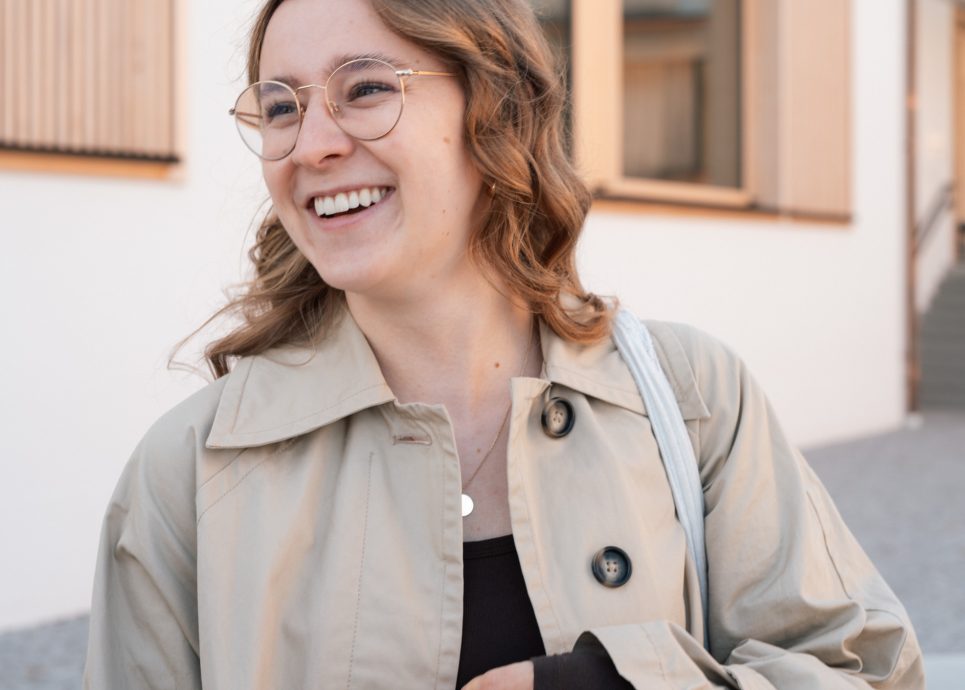
On a bright spring day, we meet Johanna Bilgeri for a stroll through her hometown of Hittisau. The valley is awash in yellow blossoms, and the young musician radiates joy as she shares stories of her artistic path – a journey that began remarkably early. Johanna started playing the bassoon at just six years old. She then went on to study with esteemed professors at the Vorarlberg State Conservatory and the University of Music and Performing Arts in Vienna, where she received the prestigious “great talent award.” Today, at 24, Johanna is rapidly ascending the world of classical music. As a soloist and chamber musician, she has earned accolades in both national and international competitions.
Since January, she has held a permanent position with one of Austria’s most respected orchestras, the Wiener Symphoniker (Vienna Symphony). Even more impressive, she performs as principal bassoonist on some of the world’s most renowned stages. We were fortunate to speak with Johanna while her bassoon was undergoing maintenance. Though she didn’t have her instrument with her, her passion for music – and her deep affection for the bassoon – shone through clearly. She spoke not only about her craft, but also reflected on life in her beloved home state of Vorarlberg as well as her vision for a more harmonious future.
Your life as a professional musician is… “Always thrilling!”
Your art thrives on… “Passion.”
Making music is at its best when… “I’m playing with people who make me feel truly at ease.”
You feel your best when… “Everything falls into place.”
This special place in Vorarlberg fills you with energy: “My hometown of Hittisau.”
If Vorarlberg were a person, its character would be: “Open, warm-hearted and down-to-earth.”
Your culinary insider tip in Vorarlberg is… “Ernele in Hittisau. Just go, enjoy the food and wine, and be fully present. It’s pure joy.
Your favorite hiking destinations are… “up the Hittisberg and the Hochhäderich mountains.”
A special place in Vorarlberg that truly resonates with you: “Schwarzenberg is wonderful. I also enjoy performing in Hittisau because I always meet people I know. It is easy to really connect, which makes it particularly special.”
What instantly makes you feel at home: “Family.”
Visiting Vorarlberg? Be sure to take home… “Cheese!”
And what should guests bring with them? “An openness to engage in conversations about topics not yet widely discussed here. New perspectives are always valuable.”
Johanna, your instrument is essential to your profession. How would you describe your relationship with the bassoon – would you say it’s like a partner?
It’s my partner in crime (laughs).
Do you think of your bassoon as a “her”?
“I’d never thought of it like that before, but at a recent concert in Trieste, I caught myself wondering just how many hours I’ve spent holding this piece of wood? Rationally speaking, it’s just an object – maple wood with a few keys – but the music that comes from it is truly extraordinary.
Is it your own instrument?
Yes, and I’m incredibly lucky! Bassoons are in high demand right now, with waiting lists of up to 19 years – not to mention the cost. A retired symphony musician sold me his, and although it was hard for him to part with it, we’ve formed a special connection as a result.
This sounds very special.
Yes, very much so. We keep in regular contact through email. He even sends me photos from his travels. Yesterday I had brunch at his place. He’s such a warm-hearted person.
Your website greets visitors with “It’s lovely that you’re here.” That statement feels personal. Do you bring that same spirit of experimentalism into your music? Leading to new avenues of expression?
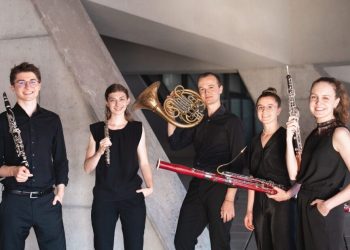
Innovation really matters to me. With my V.Töne woodwind quintet, we explore new concert formats and ways of experiencing music beyond traditional settings. My friend Ines, who helped build my website – and even though she’d never worked in music before – suggested that welcome message, and I thought it was beautifully simple. Every time I visit the site, it makes me happy.
The website’s texts are wonderfully composed. Did you write them yourself?
Yes, I wrote them. In this profession, you’re often updating your bio and other materials. I prefer to do it myself so I can control how I’m represented.
How do you feel about feedback? Is it helpful when audiences share their reactions with you?
Last year, I performed Mahler’s 6th Symphony with the Vienna Philharmonic in Cologne – my final concert as an academy member. My aunt, who lives in the city, attended and later described the story she perceived through the music. That someone without formal training could connect so deeply really moved me. It reminded me how important it is to listen with an open heart without expectations. As professionals, we often have fixed ideas about how something should sound. When you hear a symphony for the umpteenth time and a particular bassoon solo begins, you already know exactly how you want it to sound. Hearing fresh perspectives is incredibly enriching.
There are resonant spaces that create a magical atmosphere in the concert hall. Is there something that helps create such moments, or do they simply happen spontaneously?
They often happen unexpectedly, but it begins in rehearsal – especially if it’s a piece that means something special to the musicians, or when there’s a strong bond between the conductor and the orchestra. Naturally, you don’t attend a concert thinking ‘today will be magical.’ It just happens naturally and that’s what makes it so special.
What musical experiences would you recommend to visitors in this region?
“It depends on taste, but there are many great options. For instance, the Bär family and Jodok Lingg host wonderful concerts. The Vorarlberg Symphony Orchestra offers programmes that feature contemporary pieces and highlight female soloists – which I think is fantastic.” There are definitely plenty of options available.
Culture and cuisine often go hand in hand. Any experiences that combine both?Yes! With the V.Töne quintet, we once hosted a sensory concert where the audience experienced music alongside regional specialties like local herbs, cheese, and chocolate. It was about creating a full sensory experience, not just for the ears but for all the senses. When planning, we found ourselves wondering who to ask and where to source everything. But here in Hittisau, you can really get a project off the ground immediately. People readily come together on Sundays to collaborate and help out.
You travel internationally and your last email ended with “Best wishes from China.” How do you experience a sense of community and connection when you’re in other countries?
Each trip is quite different. Sometimes we have time to explore a city and take in the culture. At other times, it’s straight from the airport to the concert hall and on to the next destination. But it’s wonderful that we can bring the music, the Viennese sound, to so many places. Best of all, seeing people respond with such enthusiasm gives us so much in return. That said, I do have concerns about the environmental impact of all this travel.
How often do you visit Vorarlberg?
Not very often, unfortunately. But this summer I’ll be home for at least six weeks, as I’m performing with the Wiener Symphoniker. I’m really looking forward to that.
This year marks your debut as a musician at the Bregenz Festival.
It’s a debut, yes, but the festival has always been familiar to me. After all, I’ve played with the Vorarlberg Symphony Orchestra for quite a while. We always admired the Wiener Symphoniker when they returned to Bregenz each summer. I actually remember writing to my professor – he’s a bassoonist in the orchestra – when I was just 15. I knew he played at the festival. So I messaged him and asked if he’d be willing to give me lessons. A few years later, I began studying with him. And now we’re colleagues in the orchestra! In the end, the great performers are just people in the orchestra, but still, you can’t help but look up to them.
If you dream big – where do you see yourself? Which concert hall, which orchestra?
There are a few things that I would like to do but I don’t really have one big dream – I’m more the “go with the flow” type. But of course, there are things I’d love to do: more chamber music, more solo performances. More recently, I’ve found myself drawn to teaching – giving master classes, workshops, sharing what I’ve learned. I had such inspiring teachers who laid a strong foundation for me and it feels important to pass that on.
Why do we need Art and Culture?
What would we do without it? Honestly, I can’t imagine a world without the arts. And music is international. It is the language we all understand. It brings people together. That’s its greatest power.
Thank you for the inspiring conversation and all the best with your music career!
The Bregenz Festival will take place from 16 July to 17 August 2025.
Read more